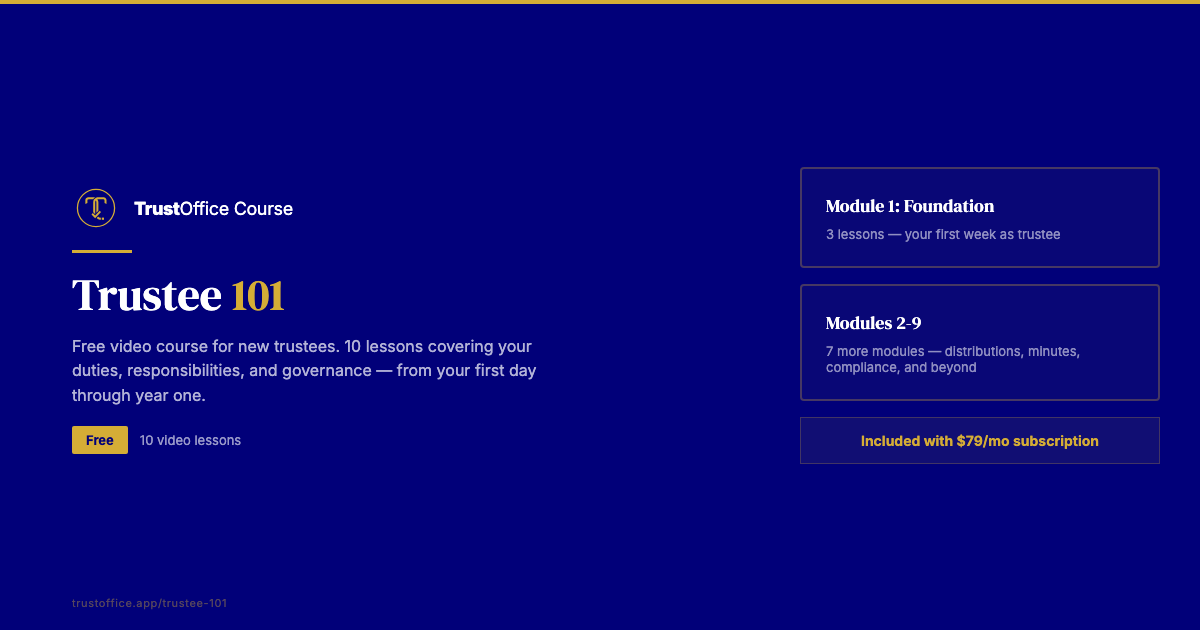
Free Trustee Course: Learn Trustee Responsibilities with Free Online Training for Board Members
Enroll in a Complimentary Trustee Course to Improve Your Skills Today
Taking a free trustee course can significantly boost one's professional abilities. It offers important knowledge regarding fiduciary responsibilities and financial oversight. Learners can advance at their own rhythm while interacting with experienced practitioners. This prospect not only expands awareness but also unlocks opportunities for career progress. However, many may consider what concrete skills they can expect to develop and how these can be implemented in everyday business situations.

Essential Capabilities You'll Obtain From a Free Trustee Course
A free trustee course provides participants with fundamental knowledge crucial for effective governance and management. The curriculum typically includes key topics such as financial literacy, enabling trustees to understand budgets, financial statements, and investment strategies. Participants also gain insights into regulatory obligations, guaranteeing compliance with regulations and ethical standards.
In addition, the curriculum bolsters strategic thinking competencies, providing learners to help achieve long-term organizational targets. Proficient communication competencies are another key aspect, enabling governance members to present ideas clearly and coordinate with stakeholders efficiently.
Furthermore, teamwork and leadership skills are emphasized, encouraging teamwork among board members and advancing a constructive decision-making process. Conflict resolution techniques are also instructed, preparing participants to navigate disagreements professionally.
Fundamentally, these competencies not only ready people for their roles as trustees but also advance their overall management expertise, making them valuable assets to any organization.
Key Benefits to Join a Free Trustee Class for Career Advancement
A significant proportion of specialists seek out approaches to improve their careers, and enrolling in a free trustee course supplies uncommon strengths that can markedly enhance one's trajectory. To begin with, these courses provide essential expertise about trustee obligations, elevating a professional's authority in their field. Acquiring the legal and ethical obligations of a trustee can open up new career opportunities and responsibilities.
Moreover, connecting with industry professionals and colleagues during these courses can lead to beneficial relationships that may facilitate career progression. Participants also acquire hands-on expertise in financial management and governance, which are increasingly sought after in various sectors. Finally, the flexibility of digital learning enables individuals to learn at their own speed, making it easier to manage education with current work commitments. Overall, signing up for a free trustee course not only expands knowledge but can read the facts also significantly improve professional prospects and career development.
Discovering the Ideal Free Trustee Class for You
How might one find the most fitting complimentary trustee program from the large selection available? First, people need to copyrightine their exact objectives and career goals, determining what abilities or information needs they want to address. Next, studying copyright and framework is essential; a comprehensive course outline can suggest whether the course will fulfill personal goals.
Additionally, considering the credentials of the educators can deliver perspective into the caliber of learning provided. Reviews and feedback from past students are crucial, as they illustrate real outcomes and experiences.
Finally, copyrightining the flexibility of the course structure—whether it is self-paced or scheduled—can assist in selecting a program that suits one's lifestyle. By taking these factors into account, people can make a more informed decision, ensuring the selected program matches their career goals and learning preferences.
Powerful Tactics for Enhancing Your Trustee Course Learning
To maximize the benefits of a trustee course, a planned approach is needed. Participants must start by setting clear goals and identifying the specific skills or knowledge they want to gain. Active engagement in the learning process is vital; this involves joining discussions, asking questions, and working together with peers. Consistently reviewing course content supports better understanding and retention of crucial concepts.
Moreover, it is helpful to document information and create summaries of key subjects, enabling simpler revision later. Connecting with peer attendees can offer valuable insights and assistance, cultivating a community atmosphere. Leveraging additional materials, such as suggested texts or online forums, can enhance comprehension and application of acquired knowledge.
Finally, utilizing the knowledge in concrete situations, whether through simulations or real-life situations, reinforces learning and fortifies assurance in trustee accountabilities. By adopting these strategies, individuals can take full advantage of their trustee course curriculum for growth in both personal and professional realms.
Tangible Uses of Fiduciary Capabilities in Governance
Trustee competencies are vital in successful organizational oversight, enabling individuals to navigate complex organizational landscapes. These abilities are essential for promoting openness, responsibility, and principled choices within different organizations, including nonprofits, educational institutions, and corporate boards. Trustees equipped with robust analytical capabilities can assess organizational results, fiscal well-being, and adherence to regulatory standards, thus improving overall governance.
Moreover, effective communication skills enable trustees to engage with stakeholders, guaranteeing that diverse perspectives are considered in decision-making processes. Dispute resolution skills are just as vital, since they assist in preserving harmony and collaboration among board members and other stakeholders. Additionally, strategic planning capabilities enable trustees to align organizational goals with broader missions, guaranteeing longevity and growth. In this way, the use of trustee skills in governance strengthens institutional frameworks but also promotes trust and integrity within communities and organizations.
Popular Questions That Are Posed Often
Are Free Fiduciary Classes Recognized by Trade Organizations?
Complimentary trustee courses may not consistently be accepted by industry associations. Recognition typically is based on the course provider and the relevant accrediting organization, so participants should check credentials before enrolling in any offering.
How much time Does a Standard Free Trustee Course Take to Complete?
A conventional no-cost trustee class usually takes between four to eight weeks to complete. Course timeframe may fluctuate depending on the provider, content depth, and learner involvement, enabling flexibility in learning schedules.
Can I Obtain a Credential After Completing a Free Trustee Course?
Yes, participants can typically obtain a certificate after finishing a free trustee program. However, certification availability may differ by provider, so people should verify the particular requirements with the program provider before registering.
May I Enroll in Unlimited Fiduciary Classes, or Exist Limitations?
In most cases, there is no restriction on how many trustee courses an individual can join. Students are advised to complete several courses for strengthening their capabilities in trustee responsibilities and governance.
What Requirements Do You Require to Participate in a Free Trustee Course?
To enroll in a free trustee course, individuals typically need a fundamental knowledge of finance basics, commitment to the course duration, and sometimes previous background in trustee positions. Specific requirements may vary by institution.